
Montessori is not a curriculum. It is a philosophy built on trust — in the child, in the process, and in the power of a well-prepared environment. It's the same at both of our campuses.
Dr. Maria Montessori was Italy's first female physician. In 1907, she opened her first classroom — Casa dei Bambini, or "Children's House" — in Rome. What happened next surprised even her.
Given a prepared environment, freedom of movement, and time to pursue their own interests, children displayed a remarkable capacity for focus, self-discipline, and joy. They didn't need to be taught to love learning — they already did.
Over the next five decades, Dr. Montessori refined her method through rigorous observation across cultures and continents. Today, the approach she developed is practiced in more than 20,000 schools worldwide — and the research consistently shows it works.
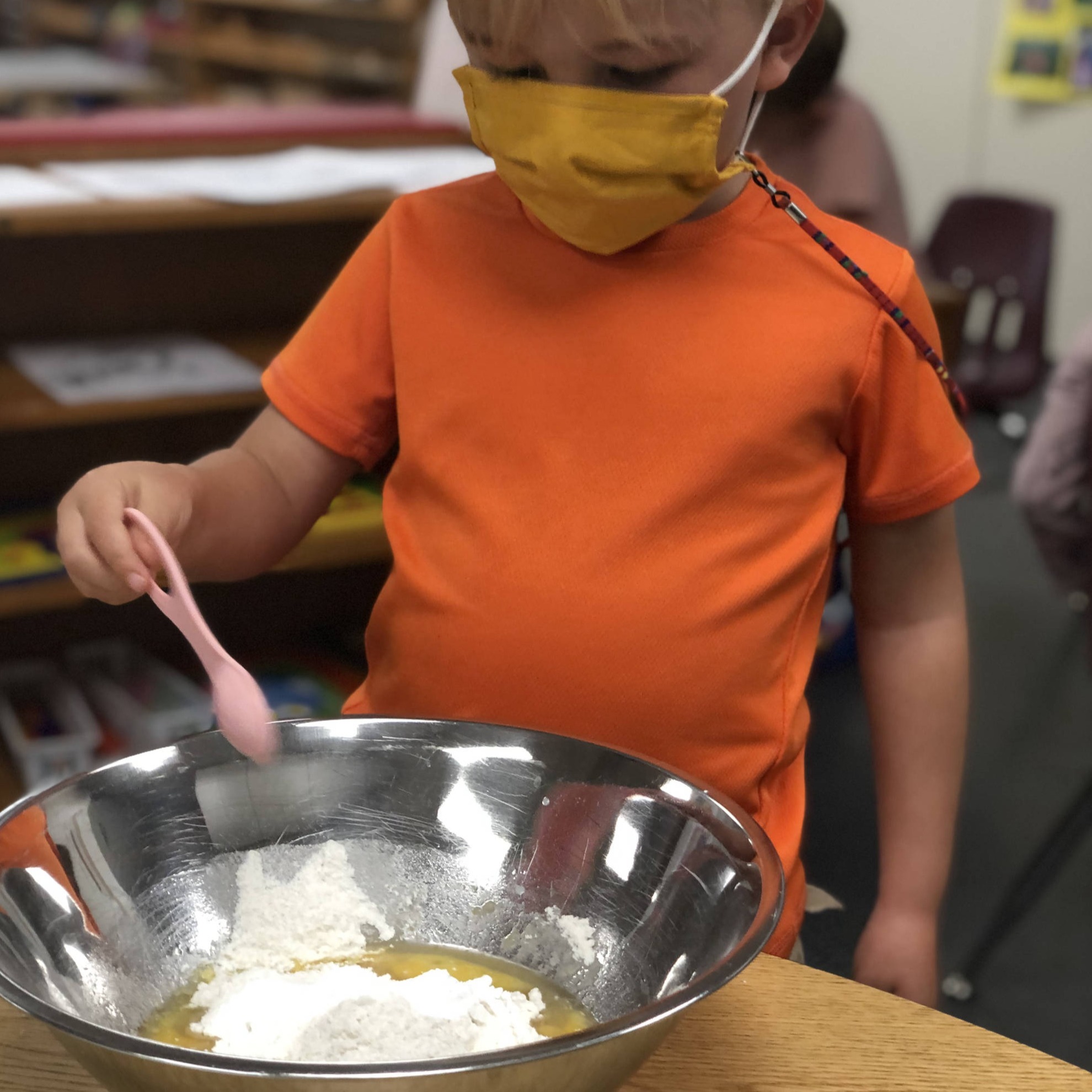
"The greatest sign of success for a teacher is to be able to say: the children are now working as if I did not exist."— Dr. Maria Montessori
At its heart, the Montessori method rests on a few foundational ideas — each backed by decades of observation and research.
Young children (0–6) absorb information from their environment effortlessly and unconsciously. The Montessori classroom is designed to give that mind the richest possible material to work with.
Children pass through windows of heightened sensitivity — for language, order, movement, small objects. Montessori teachers learn to recognize and work with these periods, not against them.
The classroom is beautiful, ordered, accessible to children, and stocked with materials that isolate specific concepts for hands-on exploration. Every detail is purposeful.
Montessori teachers are trained to observe, not to instruct constantly. They introduce materials at the right moment and then step back, trusting the child to lead their own learning.
Children learn by doing. Montessori materials are concrete, tactile, and self-correcting — the child can discover their mistake on their own without a teacher pointing it out.
Three-year age spans create natural mentorship. Older children consolidate knowledge by teaching; younger children are inspired by what they see ahead. Everyone grows.
Not a critique — just clarity on what's different and why families choose it.
| Area | Montessori | Traditional |
|---|---|---|
| Pacing | Child-driven — each child progresses at their own pace | Teacher-driven — whole class moves together |
| Materials | Hands-on, concrete, self-correcting | Primarily worksheets, textbooks, and teacher demonstration |
| Class Structure | Multi-age groupings (3-year spans) | Single-age grade levels |
| Work Time | Extended, uninterrupted work periods | Subject periods with transitions and bells |
| Assessment | Observation, portfolios, narrative progress reports | Grades, tests, standardized assessments |
| Motivation | Intrinsic — child chooses work and finds satisfaction in mastery | Extrinsic — grades, stickers, praise from teacher |
| Teacher Role | Guide and observer — facilitates, introduces, then steps back | Instructor — leads, directs, and evaluates |
A landmark 2006 study published in Science (Lillard & Else-Quest) found that Montessori children significantly outperformed peers in reading, math, executive function, and positive social behavior by age 12.
More recent studies confirm what Montessori educators have observed for over a century: when children are given autonomy, appropriate challenge, and a prepared environment, they develop not just academic skills but the drive, focus, and social intelligence to carry them far.
We'd love to talk more about the research, our approach, or your specific child. Come visit us at either campus.